Lee Maracle, in her “Conversations with Canadians” article, when addressing the concept of appropriation, speaks to ownership. In her article she fundamentally questions the idea of ownership and permission to share, show or even speak about and make art or writing regarding issues that do not “belong” to us. Maracle speaks not only to ownership of land, but of the important value of the ownership of knowledge. She contends: “during the colonization of Canada, both land and knowledge were appropriated” [1] Lee calls for the “authorship of knowledge” to be acknowledged and consulted and for “a sharing arrangement between us that is fair for all of us.” This begs the question: What is the role of role of curators, artists and educators in the model of appropriation in art?
How do we successfully share and respect artistic styles, stories and images from other cultures within a gallery setting, educational institutions and our writings/teachings?
Can black artists be the only ones permitted to draw attention to issues regarding racism? Can gay artists be the only ones to speak out against homophobia through the making of contemporary art? Do we solely have permission to show art that speaks from our own perspective and visible position?
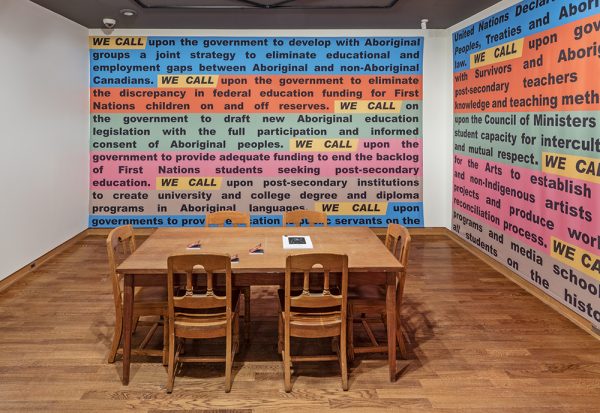
The answers to these questions are complex; however, they seem to lie within a dialogue, and a partnership. Consultation with communities, choosing curators and exhibits that represent a variety of cultures, their authentic experience, spoken from their own voice is an essential key to the difficult topic of appropriation in art. For example, Cathy Busby’s piece, entitled We Call, with its overwhelming wall of text, from ceiling to floor, displayed portions of the “Calls to Action” from Canada’s Truth and Reconciliation Commission, although produced by a white Canadian, shows the voice of Indigenous people, perceived by a white Canadian. The immense responsibility that lies within us as educators, struck me as I viewed this piece, trying to take in its context. The affect might be different depending on the audience, ranging from shame, to anger to revelatory.
Maracle clarifies that: “The intention of appropriation is stealing, so in order for appropriation to occur, theft must travel with it and receive either resale for profit or personal royalties as benefit from its use.”[2] In cases such as the paintings of Toronto painter, Amanda PL, who profits from imitating the style of Woodland Style painter Norval Morrisseau, the debate is clear, and the public has been quick to recognize and criticize. A deeper consideration is needed however, to appropriately delve into the issue of appropriation and to work towards reconciliation for the many errors of colonialism from our past.

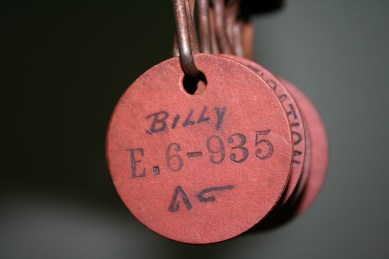
Awareness 2 2010 (printed 2016) ,
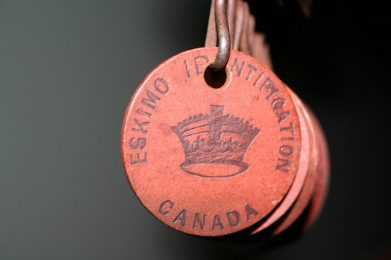
Awareness 1 2009 (printed 2016) from The Awareness Series
The body of work being created by Indigenous artists today to reveal issues of colonialism and its long and short-term effects is too immense to ignore, and should be a compulsory view for any educator, art historian or student of art today. These works represent our difficult history and its aftereffects, an essential part of our retrospective as well as our progressive gaze.
[1] https://lemonhound.com/2017/11/03/lee-maracle-on-appropriation/
[2] Lee Maracle, Conversation 10: On Appropriation, My Conversations With Canadians, BookThug 2017
[3] https://nationalpost.com/news/canada/toronto-gallery-cancels-exhibit-of-white-artists-paintings-over-complaints-of-cultural-appropriation
[4] https://www.artgalleryofhamilton.com/exhibition/barry-pottle-awareness-series/
[5] https://www.artgalleryofhamilton.com/exhibition/barry-pottle-awareness-series/

 Can Art Teach