Photography has always had the power to move people. Whether a photo is taken to remember a special moment, document an event or to try to capture the feeling itself, viewing photographs often has the ability to affect people or to move them emotionally. “Photography has historically played an important role in translating and understanding society’s global events”[1]
Some would even argue that photography has the power to influence opinions and to make changes to major events, such as Nick Ut’s 1972 photograph of children running from the Napalm bombing during the Vietnam War. While some claim this powerful photograph of a young girl showing full frontal nudity and running from the incredible terror of war is suspected to have been the impetus for the actual end of the Vietnam War, there is no doubt that at the very least the image brought outrage and visibility to the cruelty of war.[2] What Barthes refers to as the “punctum” rising to the scene in this image likely affected so many parents of children, who they themselves felt a variety of “pricks” or “wounds” arising from within. [3]
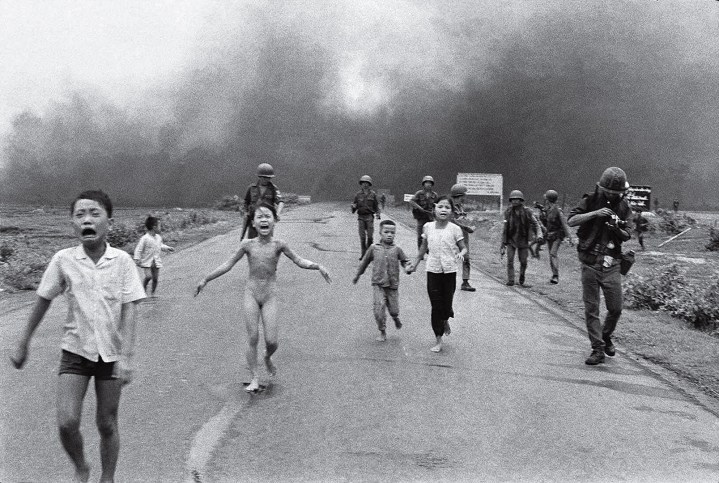
Many images of traumatic events unearth a landmine of feelings for the viewer, especially those directly affected in their histories or cultures by the events recorded. Documentary photography has often moved between journalism and art and has more recently found a new place in the art gallery since the shift of focus in many museums and galleries has been to draw attention to social justice issues.
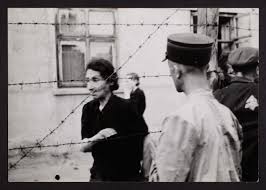
One such collection of photographs are the Lodz Ghetto Photographs of Henry K Ross, housed at the AGO.[4] During Ross’s time in the Lodz Ghetto in Poland in 1940, he was forced to serve as the official Administrative Photographer for the Nazi regime. For years he buried negatives and photos. “Henryk Ross survived, and in March of 1945, he unearthed his work with his own hands. Almost 3,000 negatives had survived the Polish winter.”[5] As in Ut’s images and so many others, these “photographs represent personal experiences of global significance.”[6] Again, the viewer has to do the hard work of processing the difficult knowledge raised by these photographs; however, much like Rebecca Belmore, the real labour was encountered by Lodz, endangering his own life to document the lives of others, unearthing them upon his survival. Once again, the artist does the real labour and invites us in to experience it with them. As art educators, we have a responsibility to do so.
[1] https://petapixel.com/2016/10/31/photography-changed-world/
[2] https://petapixel.com/2016/10/31/photography-changed-world/
[3] Brown, E. & Phy, T. (2014). Feeling Photography. Durham, NC: Duke University Press. Introduction.
[5] https://mjhnyc.org/exhibitions/memory-unearthed/
[6] https://mjhnyc.org/exhibitions/memory-unearthed/

 Can Art Teach